
7 Things to Check Before You Sign
When someone searches Google for the service you offer, who do they find first: you or your competitor?
A good website isn’t enough on its own. If people can’t find it, it can’t win you business. That is the job of search engine optimisation (SEO), and the SEO company you choose will largely determine whether the investment pays off.
This guide walks through what an SEO company actually does, why it matters, how to choose well, and how to tell whether a proposal is worth your money.
What Does an SEO Company Do?
An SEO company helps your business appear in organic (unpaid) search results, so potential customers can find you when they search for what you sell. Unlike advertising, you don’t pay for each click. Instead, you invest in making your website and online presence easier for both search engines and customers to understand.
In practice, that usually starts with keyword research, which identifies the terms your customers actually use. From there, the work moves to on-page optimisation (titles, headings, content and internal links) and technical SEO, which fixes issues that stop Google from crawling, indexing or understanding your site. A good provider will also build a content strategy, publishing pages and articles that answer real customer questions, and, if you serve a particular area, strengthen your local SEO for location-based searches. Throughout, reporting should track not just traffic and visibility but, most importantly, enquiries.
The exact mix depends on your industry, website and goals, which is why no two SEO engagements should look identical.
Why Your Business Needs SEO
Most buying journeys begin with a search. If your competitors appear and you don’t, they get the first conversation, and often the sale.
But visibility only matters if it reaches the right people. A construction firm gains far more from visitors searching for its specific services in its area than from thousands of unrelated clicks. That’s why good SEO focuses on relevance, not just volume.
Relevance also builds credibility. Customers typically compare several providers before deciding, and clear service pages with useful content help you look like the obvious, trustworthy choice. And unlike paid ads, which stop the moment your budget does, SEO keeps working over time. The catch is that visibility only turns into leads if your website also makes it easy to get in touch, a point we’ll return to shortly.
Once you’ve decided SEO is worth pursuing, the next question is who should do it.
7 Things to Check Before Choosing an SEO Company
Choosing a partner should involve more than comparing monthly prices or promises of first-page rankings. These seven checks will help you separate credible providers from the rest.
1. A strategy built around your business
Your services, audience, competitors and location should shape the plan. A strategy designed for an online shop won’t suit an engineering consultancy. Ask how the company will decide which opportunities to pursue first, and why.
2. A clearly defined scope
A tailored strategy still needs clear boundaries. Find out exactly what’s included: keyword research, content, technical fixes, local SEO and reporting. Check whether website changes are covered or billed separately by a developer. Vague scopes lead to disputes later.
3. Meaningful measurement
Once you know what’s being delivered, ask how success will be judged. Useful measures include organic impressions and clicks, visibility for relevant keywords, growth in qualified traffic, enquiries from organic search, and the conversion rate of organic visitors. Rankings are a helpful signal, but they don’t pay your bills. Enquiries do.
4. Honest expectations
Results depend on competition, your site’s current condition, the quality of implementation and changes to search algorithms. For that reason, be wary of anyone who guarantees specific rankings or instant results before reviewing your website. A credible provider explains their approach, sets realistic expectations and reports progress honestly.
5. An understanding of conversion
Traffic is only half the job. Can visitors quickly see what you offer? Is it easy to request a quote or book a call? Do enquiries reach the right person quickly? The best SEO companies think about the whole journey from search to enquiry, not just the first click.
6. Relevant experience
Ask for case studies, client references or examples from businesses like yours. Experience in your sector or market means a shorter learning curve and fewer costly assumptions.
7. Transparent communication
Finally, you should always know what’s being done, why, and what’s coming next. Look for regular reports in plain language rather than jargon-heavy dashboards.
If a provider falls short on several of these points, watch for the warning signs below.
Red Flags to Avoid
Some problems are obvious before you sign anything. Be cautious if a company:
- Guarantees first-page rankings
- Asks no questions about your business, customers or goals
- Offers vague deliverables or “secret” methods
- Reports only on rankings, with no enquiry data
- Pushes you into a long contract before any audit
How Much Does an SEO Company Cost?
Pricing varies with the work required, how competitive your market is, your website’s condition and the level of ongoing support. A small local business with a well-built site needs a very different investment from one competing nationally.
When comparing quotes, look past the monthly figure. Check what the fee actually covers, whether content and development are included, how technical issues will be handled, what reporting you’ll receive, and whether the plan ties back to your business goals.
The cheapest quote isn’t automatically poor value, and the most expensive isn’t automatically better. The right choice is the one with the clearest strategy and the most credible plan for generating enquiries.
SEO Works Best as Part of a Bigger System
Even the best SEO plan can underperform if it stands alone. Consider the full path a customer takes:
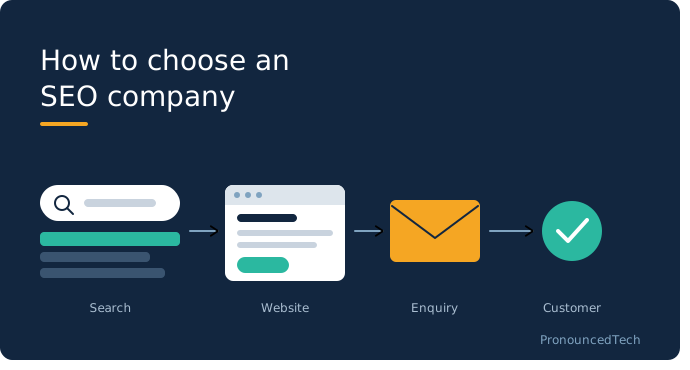
Get found → Visit your website → Make an enquiry → Receive a response → Follow up → Become a customer.
If your site attracts visitors but makes contact difficult, you lose them at step three. If enquiries arrive but aren’t followed up promptly, you waste the investment at step five. This matters most for project-based businesses, where a single qualified enquiry can be worth a great deal.
That’s why your website, SEO, enquiry process and follow-up should work as one system rather than four separate efforts.
How PronouncedTech Can Help
This joined-up view is how we work at PronouncedTech. We look at how people find your business, what they see when they arrive and how easily they can contact you, then improve each step so online visibility turns into customer enquiries.
Depending on your needs, that may include website optimisation, SEO, landing pages, lead capture, automation and performance tracking.
Our commitment: we won’t guarantee rankings, because no honest provider can. We will explain what we’re doing, report on enquiries as well as traffic, and tell you plainly what’s working and what isn’t.
Ready to Be Found by the Right Customers?
If people are searching for your services but your phone isn’t ringing, your digital strategy is worth a closer look.
Request a consultation and we’ll review your website and show you where the biggest SEO opportunities are.
Frequently Asked Questions
How long does SEO take to work?
Typically several months of sustained effort. Timelines depend on competition, your website, the work implemented and the keywords targeted. Some improvements appear sooner, but no results can be promised by a fixed date.
Can an SEO company guarantee first-page rankings?
No. Many factors affecting Google’s results are outside any provider’s control, so treat guarantees as a red flag.
Is SEO worth it for a small business?
Often, yes, when it targets searches that match what you sell. The return depends on competition, investment, conversion rates and the value of each enquiry.
Do I need a new website before investing in SEO?
Not necessarily. An audit can show whether targeted improvements are enough or a rebuild is justified.
What’s the difference between SEO and paid advertising?
SEO earns visibility in organic results over time, while paid search places ads you pay for per click. Many businesses use both, and the right balance depends on your goals and budget.